May. 25, 2026
In industrial automation and machinery control, foot-operated switches play a critical role in improving efficiency and operator safety. Among the most commonly used solutions are the single pedal safety switch and the dual pedal safety system. While both serve similar purposes—hands-free machine control—they differ significantly in design, redundancy, and safety performance.
Understanding the dual pedal vs single pedal safety trade-offs is essential for manufacturers, engineers, and safety managers who aim to balance productivity with operator protection. Choosing the wrong configuration can lead to unnecessary risks, reduced efficiency, or compliance issues with safety standards.

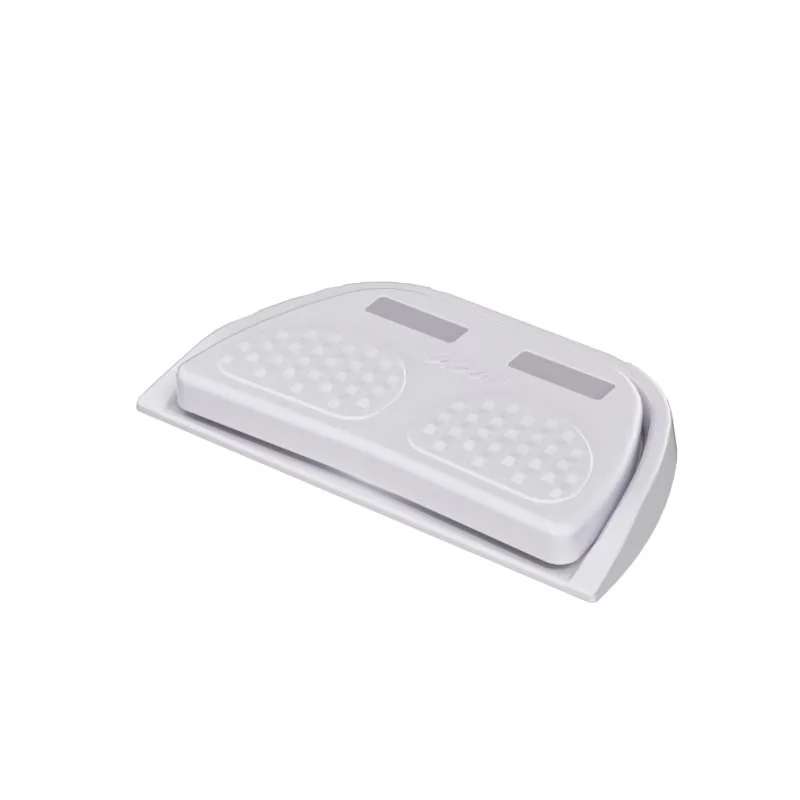
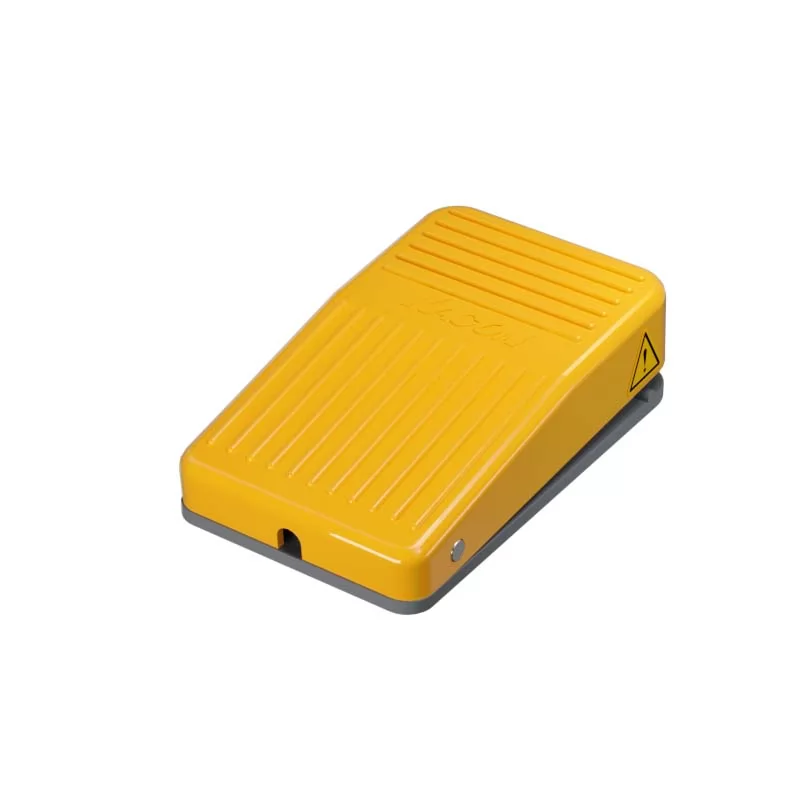
A single foot pedal switch is the most basic form of foot-operated control used in machinery. It allows an operator to activate or deactivate equipment using one pedal, typically by pressing down with the foot.
Single pedal systems are widely used due to their simplicity and cost-effectiveness. They are commonly found in light to medium-duty applications such as packaging machines, sewing machines, and basic assembly equipment.
Key characteristics include:
Simple ON/OFF control mechanism
Compact design for limited workspace environments
Easy installation and maintenance
Lower cost compared to multi-pedal systems
While a single pedal safety switch offers convenience, it has limitations in terms of safety:
Lack of redundancy: A single point of activation means accidental presses can immediately trigger machine operation.
Higher operator risk: In high-speed machinery, unintended activation can lead to injury.
Limited safety interlock options: It may require additional external safety devices to meet industrial standards.
In many industrial environments, a single pedal system must be combined with guards or emergency stop systems to ensure compliance with safety regulations.
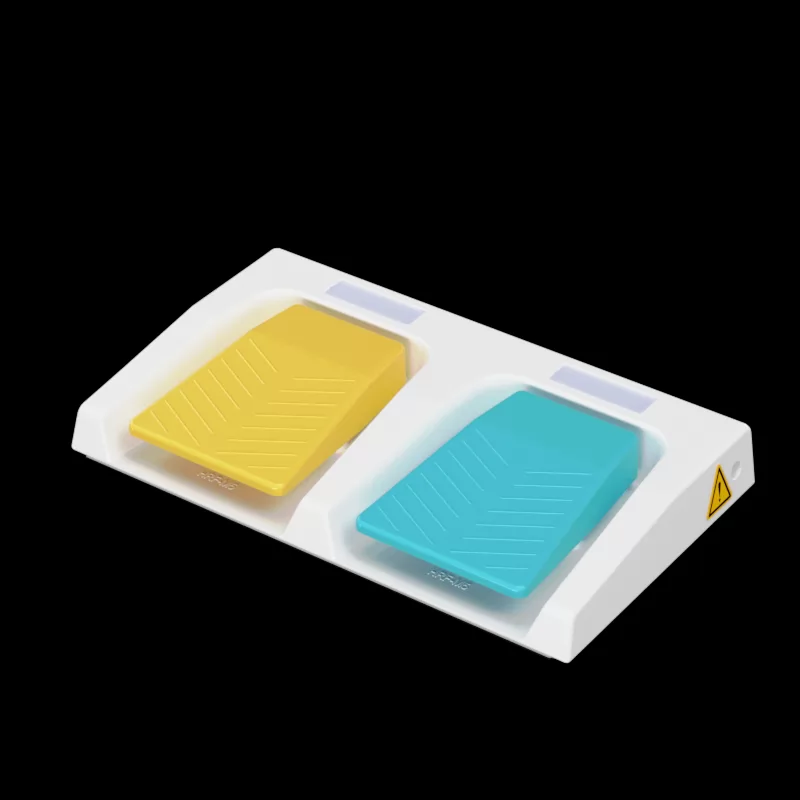
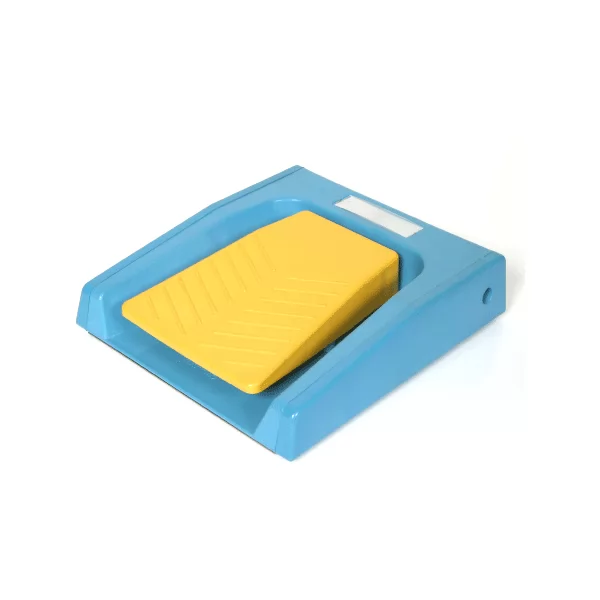
A dual pedal safety system uses two separate pedals that often require simultaneous or sequential activation to operate machinery. This design introduces redundancy and improves control precision.
Dual pedal systems are commonly used in high-risk industrial environments where operator safety is a priority.
Main characteristics include:
Two-step or dual-confirmation activation
Reduced risk of accidental triggering
Improved operational control and precision
Enhanced integration with safety interlock systems
In some advanced configurations, both pedals must be pressed simultaneously, while in others, one pedal acts as a safety enable switch and the other as a trigger.
Manufacturers such as Kacon provide industrial-grade dual pedal systems designed for heavy-duty environments where safety compliance is critical.
When comparing dual pedal vs single pedal safety trade-offs, the key differences revolve around safety redundancy, operational efficiency, and complexity.
Single pedal systems:
Offer minimal redundancy. A single accidental press can activate machinery instantly.
Dual pedal systems:
Provide built-in redundancy. The requirement of two inputs significantly reduces accidental activation risk.
From a safety engineering perspective, dual pedal systems are generally preferred in high-risk environments such as metal stamping, hydraulic presses, and automated cutting machines.
Single pedal switch:
Faster and simpler operation. Operators can quickly trigger machines with minimal effort.
Dual pedal safety system:
Slightly slower operation due to dual activation requirements, but this delay is intentional for safety control.
In high-volume production environments, single pedal systems may improve speed, but at the cost of increased risk.
Human error is one of the leading causes of industrial accidents.
Single pedal systems are more vulnerable to:
accidental stepping
fatigue-related missteps
cluttered workspace triggers
Dual pedal systems reduce these risks by requiring deliberate coordination between both feet or sequential actions.
This makes dual pedal systems a preferred choice in environments where industrial foot pedal safety switch systems are required.
Single pedal systems:
Easier to install, troubleshoot, and replace. Fewer components mean lower maintenance costs.
Dual pedal systems:
More complex wiring and control logic. However, modern designs often integrate smart diagnostics and modular components.
Some advanced systems from manufacturers like Kacon are designed to simplify maintenance while maintaining high safety performance.
Single pedal switches are more affordable upfront.
Dual pedal systems require higher initial investment but may reduce long-term safety-related costs such as downtime, injury claims, or compliance penalties.
When evaluating cost, it is important to consider total cost of ownership rather than just purchase price.
Choosing between a single or dual pedal system depends heavily on the industrial application.
Single pedal systems are suitable for:
Light-duty machinery
Sewing and textile equipment
Simple packaging lines
Non-hazardous environments
These applications prioritize speed and simplicity over advanced safety redundancy.
Dual pedal safety systems are preferred in:
Hydraulic press machines
CNC machining equipment
Metal cutting and stamping operations
Heavy industrial automation systems
In these environments, the dual pedal safety switch system significantly reduces accident risk and ensures compliance with strict safety standards.
Selecting between single and dual pedal systems requires evaluating several factors:
High-risk machinery should always use dual pedal systems or additional safety interlocks.
Industries governed by strict safety standards often require redundant control systems.
If speed is critical and risk is low, a single pedal system may be sufficient.
Modern industrial setups may require compatibility with PLC systems, emergency stop circuits, and safety controllers.
Dust, moisture, and vibration can affect pedal reliability. Industrial-grade models are recommended for harsh environments.
The dual pedal vs single pedal safety trade-offs highlight a fundamental balance between speed and safety in industrial control systems. Single pedal systems offer simplicity and fast operation but lack redundancy. Dual pedal systems provide enhanced safety through controlled activation, making them ideal for high-risk environments.
Ultimately, the choice depends on the specific application, safety requirements, and operational priorities. In many modern factories, dual pedal systems are becoming the standard due to increasing emphasis on worker safety and regulatory compliance.
Manufacturers like Kacon continue to develop advanced foot pedal solutions that help bridge the gap between safety, efficiency, and industrial performance.
The main difference lies in safety redundancy. A single pedal system uses one activation point, making it faster but more prone to accidental triggering. A dual pedal safety system requires two inputs, reducing the risk of unintended machine activation and improving operator safety in industrial environments.
In most industrial applications, yes. Dual pedal systems significantly reduce accidental activation risks. However, they may not be necessary for low-risk machinery where speed and simplicity are more important than redundancy. The safest choice depends on the application and risk level.
To choose the right system, evaluate machine risk level, operator workflow, safety regulations, and environmental conditions. High-risk operations such as metal stamping or hydraulic pressing typically require dual pedal systems, while light-duty equipment may operate safely with a single pedal switch.
 Momentary vs maintained foot switch
 Ergonomic benefits of dual pedal design
 IP67 vs IP68 foot switch for marine use
 Best dual foot switch for hydraulic presses
 Wiring diagram for dual safety foot switches
 Troubleshooting 3-position switch contacts