November. 09, 2026
Inductive proximity sensors detect metal objects without touching them — no wear, no contact bounce, and no mechanical switch to replace. They are the quiet workhorses of automated equipment: checking a part is in place, counting passing pieces, or confirming a cylinder has reached the end of its travel. Selecting one is mostly a matter of matching five things to your machine: what metal you detect, how far away it is, how much space you have, what signal your controller expects, and how fast the target moves. This guide walks through each one.
Catalogue sensing distances are quoted against steel. The KACON KPR series, for example, covers 0.6 mm to 40 mm depending on size — from the Ø3 and Ø4 miniature models at 0.6–0.8 mm up to the M30 non-flush models at 40 mm. If your target is not steel, apply the correction factor: stainless steel about 0.85, brass about 0.5, copper about 0.45 and aluminium about 0.45. A sensor rated 10 mm on steel only reaches about 4.5 mm on aluminium, so size the sensor on the corrected distance, not the headline figure — and leave a margin for mounting tolerance and vibration.
A flush-mount sensor can sit level with the surrounding metal, which is what you want in tight spaces — the KPR miniature sizes (Ø3, Ø4, M4, M5) are flush-mountable for exactly that reason. Non-flush models need a clear zone around the sensing face, but they reach further for the same housing size: in the KPR range, an M12 non-flush model reaches 10 mm where the flush version reaches 6 mm, and an M30 non-flush model reaches 40 mm. If the mounting bracket is steel, remember that a non-flush sensor mounted flush will lose distance; choose the mounting style first, then the size.
Match the output to your controller input. Three-wire DC models come in NPN or PNP, normally open or normally closed (output codes 1–4 in the KPR range), and draw no more than 10 mA with no load. Two-wire models (normally open, with some models offering NO/NC selection) simplify wiring where only two conductors are available, at up to 0.8 mA no-load current. All KPR models run on 10–30 V DC with ripple below 10%, and carry reverse-polarity, short-circuit, overload and surge protection, so a wiring mistake does not destroy the sensor.
A sensor that is too slow misses fast-moving targets. Small KPR models respond at up to 2000 Hz, which suits high-speed counting and small-part detection; larger long-distance models run slower (down to 100 Hz at M30), which is ample for end-of-travel and presence checks. Check the frequency against your fastest target — a part passing in 1 ms needs a sensor that can switch in well under that time — and note that repeat accuracy is better than 1% for 3-wire models, so the switching point stays put shift after shift.
Where the sensor lives decides the rest. The KPR series is rated IP67 with an operating range of −25 to +70 °C and 35–95% relative humidity, and is built to IEC 60947-5-2 — suitable for washdown-adjacent and oily machine environments. Small housings are stainless steel; the sensing face is POM on sizes up to 6 mm and PC above that, and every model carries an LED that shows its switching state at a glance. For connection, choose the standard 2 m cable, or an M8 or M12 connector (with or without a cable) where the sensor must be swapped without rewiring.
If you are specifying sensors for a new machine, the KPR series inductive proximity sensor covers the full range in one family — Ø3 to M30, flush and non-flush, 2-wire and 3-wire NPN/PNP, with sensing distances from 0.6 mm to 40 mm. For selection help or an OEM quotation, contact our team — tell us your target metal, distance, mounting space and controller input, and we will recommend the exact model.
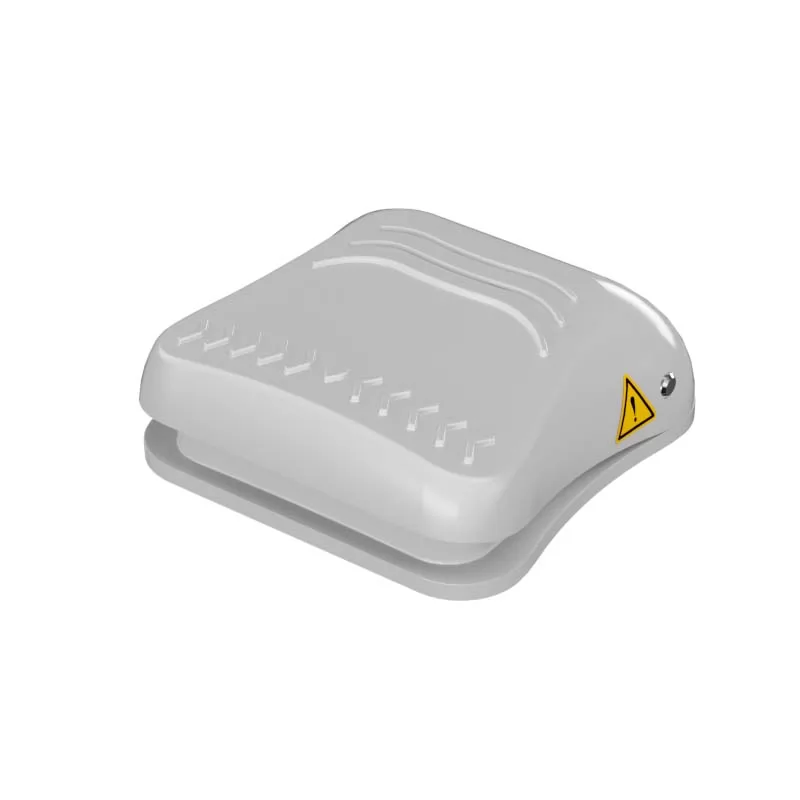 Industrial safety foot pedal wiring diagram