November. 08, 2026
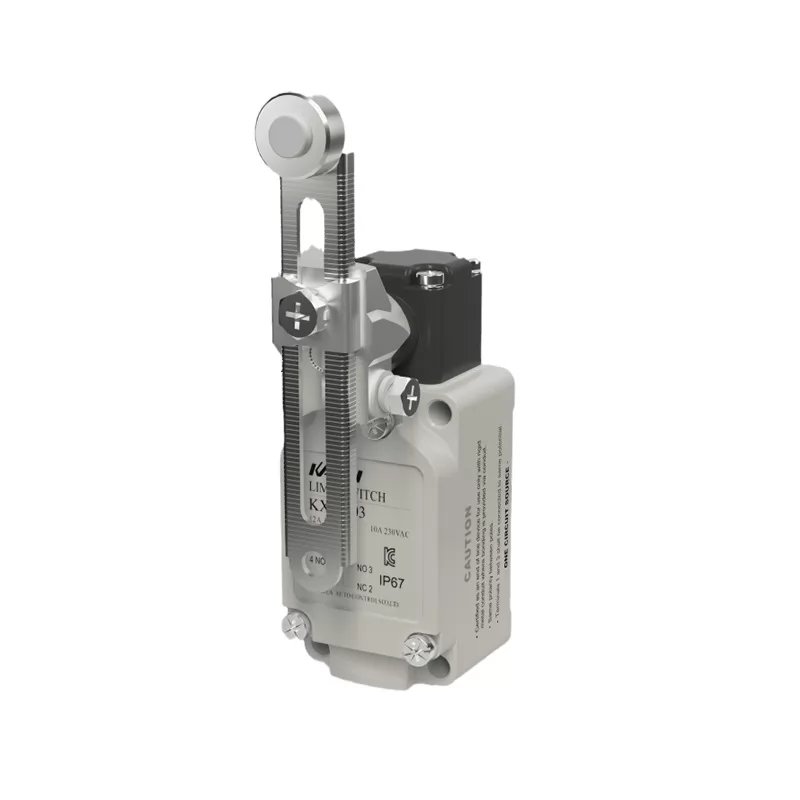
A roller lever limit switch detects the position of a moving part through a lever arm fitted with a roller. When a cam, dog or the workpiece itself passes, it pushes the roller, the lever rotates, and the switch contacts change state. Because the roller rolls along the surface instead of scraping across it, actuation is smooth, friction and wear are low, and the switch tolerates fast-moving or slightly misaligned targets that would damage a plain plunger.
That combination — forgiving actuation and long mechanical life — is why roller lever types are the most widely used limit switches on conveyors, machine tools, packaging lines, lifts and automated assembly equipment.
Lower actuation wear. The rolling contact reduces friction on both the roller and the target surface.
Forgiving of approach angle. The lever can be struck from the side and at an angle, so precise alignment of the moving part is less critical.
Adjustable geometry. On adjustable models the lever length — and often the roller position — can be set to match the stroke and mounting space.
Snap-action or slow-action contacts. Fast, bounce-free switching for control circuits, with contact forms such as 1NO+1NC or 2NC for safety-related monitoring.
For a side-by-side comparison of the two actuator styles, see our guide to roller lever vs plunger limit switches.
KXL series — general-purpose workhorse. The KXL series is rated 12 A at 250 VAC with IP67 sealing and snap-action contacts in a die-cast aluminium body. Roller lever versions include the KXL-301 adjustable roller lever, the KXL-702 cross roller lever, and Ø50 roller models such as the KXL-705 and KXL-725 (aluminium and rubber roller) and the adjustable KXL-706 — large rollers suit high-speed cams and rough surfaces.
KXM series — miniature, for tight spaces. Where mounting space is limited, the KXM series offers roller lever models such as the KXM-702 and the adjustable KXM-703 and KXM-726 (Ø50 roller). KXM is rated 6 A at 250 VAC, sealed to IP67, with a positive-opening NC contact and 24K gold-plated contacts for reliable low-current switching.
Both series are part of the wider KACON limit switch range, which also covers plastic safety types (KXN), sealed pre-wired types (KXF) and compact horizontal types (ZXG).
Roller size and material. Larger rollers (for example Ø50) run smoother at higher speeds and over rough cams; steel rollers maximise wear resistance, rubber or plastic rollers are kinder to delicate surfaces.
Lever adjustability. Fixed levers are simpler and cheaper; adjustable-length levers let one model cover several stroke and mounting positions.
Contact form and action. Choose snap action for fast, repeatable switching; confirm the contact configuration (1NO+1NC, 2NC, etc.) your circuit — or your safety function — requires. For safety circuits, look for positive-opening NC contacts.
Current rating. Check the rating under your actual load category (for example AC-15 for inductive AC loads), not only the headline thermal current.
Sealing. IP67 models suit washdown and outdoor-adjacent environments; IP65 is enough for dry indoor machinery.
Mounting and wiring. Match the mounting centres and cable entry to your machine, and decide between terminal wiring and pre-wired versions before ordering.
If you are specifying roller lever limit switches for a new machine — or qualifying a second source for an existing design — send us your current model number or a photo of the mounting position. We will cross-reference the closest KACON equivalent and reply with a quotation within two working days. Contact KACON or browse the full limit switch range.
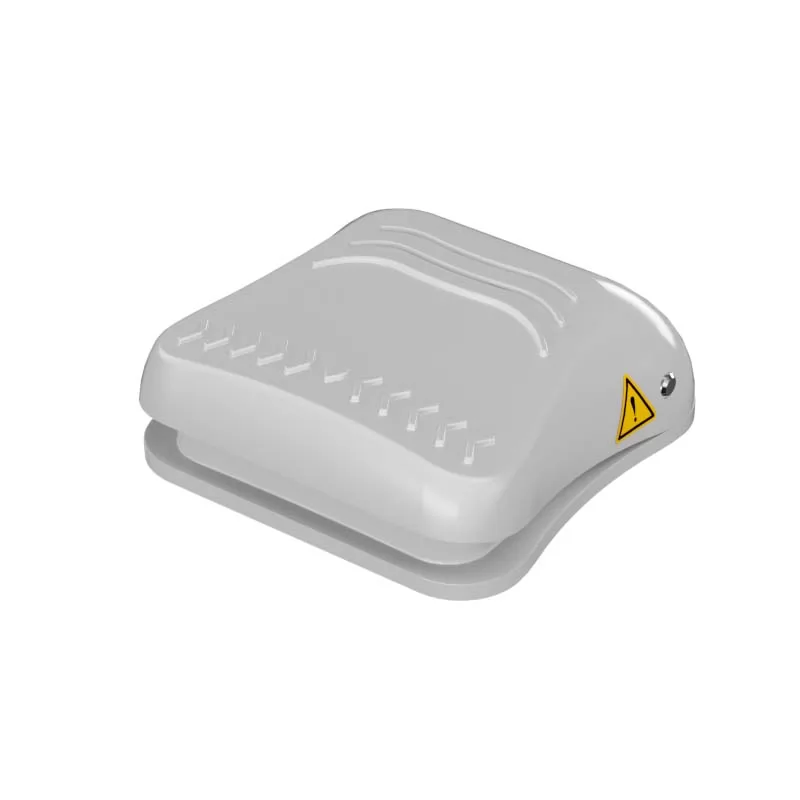 Industrial safety foot pedal wiring diagram